A First-Time Play Reading with Friends
A first-time play reading with friends can turn a short script into an easy, lively evening with clear role-sharing and one thoughtful question.

The common mistake in a first-time play reading with friends is choosing a long script, then treating the evening like a performance everyone has to get right. That can turn a curious experiment into homework. A short, flexible read-through gives the group room to hear the play, trade roles, and finish with a question rather than a verdict.
How do you choose a short play for a first reading?
Look for a one-act play or a brief scene collection with a small cast, clear entrances, and dialogue that can be followed aloud without much background reading. A public-library play collection, a bookstore’s drama shelf, or a reputable script publisher’s catalog can help you browse. Check that everyone can access the same text legally, and make sure the script is complete rather than an excerpt that ends before its central tension develops.
Choose for the group’s curiosity, not an imagined ideal of what a “serious” play should be. A comedy can make a first read less intimidating; a family drama may offer plenty to talk about without requiring anyone to imitate a polished stage voice. If the play has a large cast, elaborate scene changes, or long passages of unfamiliar language, set it aside for another gathering.
Before deciding, scan the opening pages and cast list. Ask whether the situation becomes understandable through the dialogue, whether the roles can be shared among the people coming, and whether the ending leaves something open to discuss. Content notes from a publisher or library listing can also help the group choose a script that feels comfortable for everyone.
How many people do you need for a group play reading?
A small group is enough. The number of people need not match the number of characters: one reader can take several minor roles, and a narrator can voice stage directions. For a first gathering, invite people who are happy to read casually and listen kindly. The aim is to hear how the play works on the page, not to cast a finished production.
Say you have four friends and a script with six speaking parts. One person could read the stage directions, while the other three divide the characters and swap a role at a scene break. If one person is uneasy about reading aloud, they might handle stage directions or simply listen. The observable result to aim for is a session where everyone can follow the action and contribute without being pushed into a part.
Agree on the tone beforehand. A simple invitation—“We’ll read for fun, and no acting experience is needed”—takes pressure off. Let people know they can pass on a role or pause if they want; the group can adapt the parts without making a production of the change.
How should friends take turns reading the roles?
Start by assigning parts for the first scene, then rotate at a natural break. This gives each reader time to settle into the rhythm before switching, while keeping the evening informal. If the script has a narrator or lengthy stage directions, share that role too rather than leaving one person with all the non-character text.
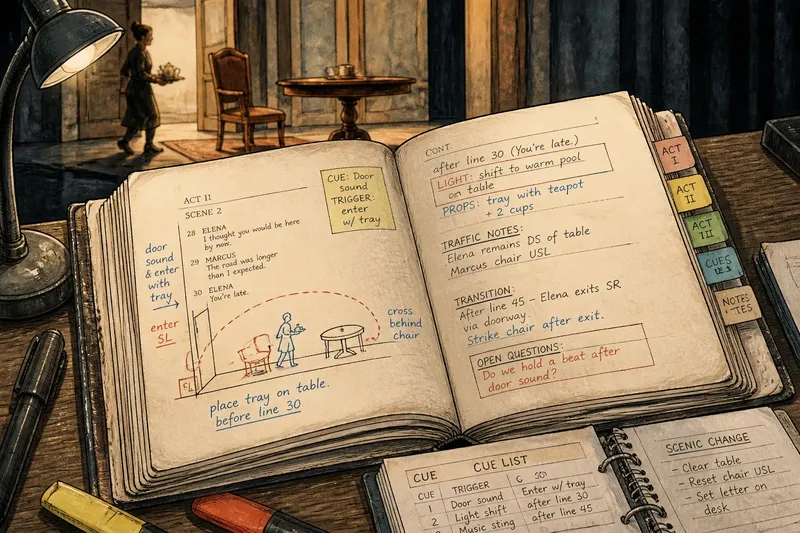
Use a printed script, a tablet, or a shared digital copy, and choose one version so everyone can find the same lines. A pencil or sticky note can mark scene breaks and role changes. Keep the text visible, and avoid stopping for every stumble: a missed word rarely obscures the scene, and the group can simply pick up at the next line.
Read the dialogue at a comfortable speaking pace. Readers can try a line with a different emphasis if it feels natural, but no one needs to invent accents, gestures, or blocking. Let punctuation and the other person’s response provide clues. If a sentence is confusing, mark it lightly and keep moving; the group can return to it after the scene.
What do you need to prepare before everyone arrives?
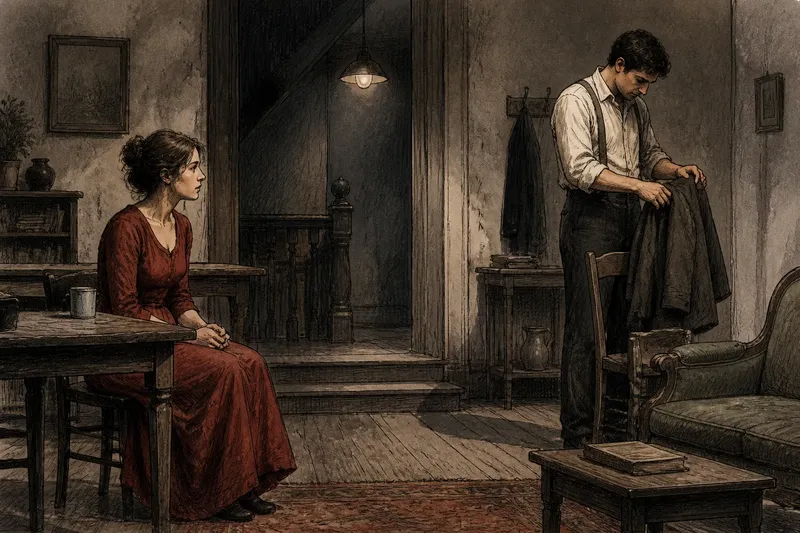
Keep preparation modest. Pick a script, confirm who is coming, and make sure each person can see the text. Arrange chairs so everyone can hear one another, then set out water and a simple snack if that suits the gathering. A quiet living room or library meeting room is more useful than a theatrical setup.
- Choose a complete script that fits the group’s interest and comfort.
- Check that every reader has access to the same text.
- Decide who will read stage directions and how roles may rotate.
- Set an informal stopping point, such as the end of the play or a chosen scene.
- Invite readers to pass, pause, or listen instead of taking a role.
- Keep a notebook nearby for moments or questions the group wants to revisit.
Do not over-rehearse or assign homework unless the group actively wants it. A first reading benefits from surprise: the page can reveal an unexpected shift in tone, a character’s evasive answer, or a stage direction that changes how a line lands.
What should you do when the reading ends?
Give the group a moment, then ask one open question rather than asking for a rating. “What did you keep thinking about?” invites a range of answers without requiring anyone to defend a verdict. Other useful options include “Which relationship changed as you read?” or “What did you imagine during the final scene?” Choose one question and let the conversation wander from there.
Listen for differences in what people heard. One reader may have taken a line as a joke, while another heard it as a deflection. Both responses can be useful: they point toward the choices a production might make with timing, movement, or tone. The group need not settle on a single interpretation. If a question brings up difficult personal material, let people decline to answer and return to the play itself.
Can a group reading feel like a performance?
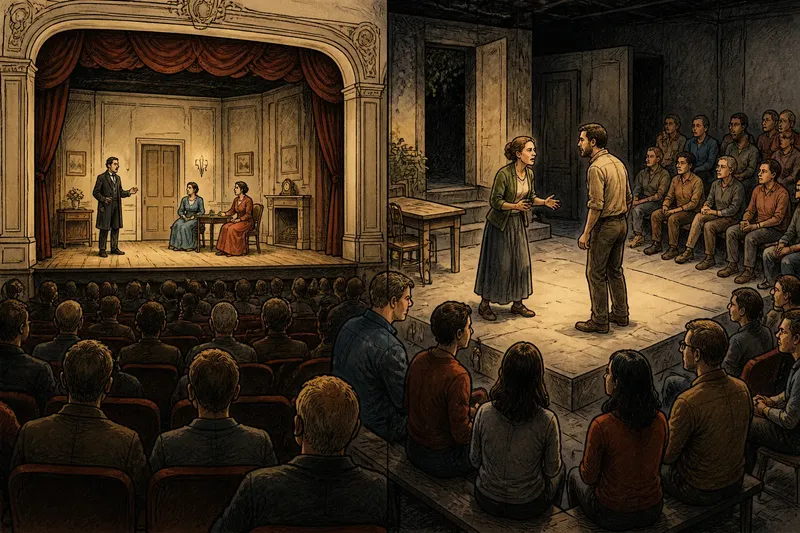
It can have lively moments, but a shared reading is not a rehearsal or a substitute for seeing a production. The script supplies dialogue and directions; each reader supplies a voice in the moment. Without costumes, lighting, and coordinated movement, the group may notice how much a scene depends on what the text leaves unsaid.
You can acknowledge that gap without trying to fill it. If a direction mentions a door, let the reader say the words on the page rather than arranging chairs into a set. If a scene changes location, a brief pause is enough. The point is to hear how the writing guides attention and where it leaves room for interpretation.
What if someone loses their place or dislikes the play?
Pause, find the line, and continue. Someone can ask for a recap of the last exchange, or another reader can take over a role for the next scene. A stumble is ordinary, not a sign that the group has spoiled the reading.
If the play is not working for everyone, finish the current scene and decide together whether to continue. People can name what feels distant or unclear without turning the discussion into a judgment of the reader. A useful first-time play reading with friends makes space for honest reactions, including “I’m not sure yet.” That uncertainty is a good place to leave the conversation open.