The Unspoken Work of a Pause in a Play
Learn how a pause in a play shifts attention and tension, and use a simple listening method to tell a purposeful silence from a stalled moment.
The most common mistake in watching a pause in a play is treating every silence as the same kind of silence. That flattens the scene: a held breath, a search for words, and an empty delay all begin to feel interchangeable. A pause can change what an audience notices without adding a line, but its effect depends on what the actors, stage, and moment are doing while speech is absent.
To read a pause in a play, listen for its pressure rather than counting its length. Silence may sharpen attention, stretch an expectation, or let a thought become visible. The useful question is not simply, “How long was that?” It is, “What changed for me during it?”
A pause redirects attention without adding dialogue
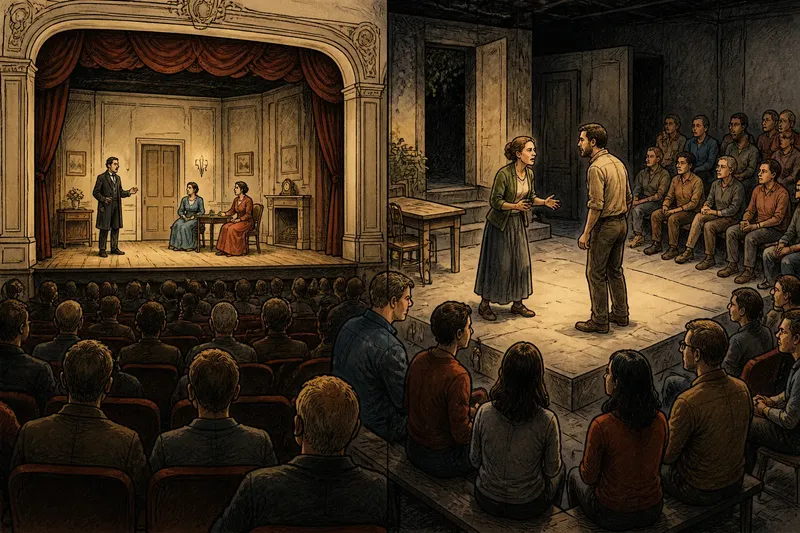
Speech gives an audience a clear path: follow the words, their rhythm, and the information they carry. When the words stop, that path disappears. Attention can move to a face, a hand that has not released a letter, a chair left between two characters, or the faint sound of a room. The pause makes those details available, though it does not dictate which one every spectator will notice.
Duration matters because the audience begins to anticipate a return to speech. A brief silence may register as punctuation. A longer one can make the expectation itself palpable: the audience waits for an answer, an action, or a change in the relationship. If that expected event does not arrive, the silence may feel defiant or unsettling. If it arrives at the right moment, the line can land with renewed force.
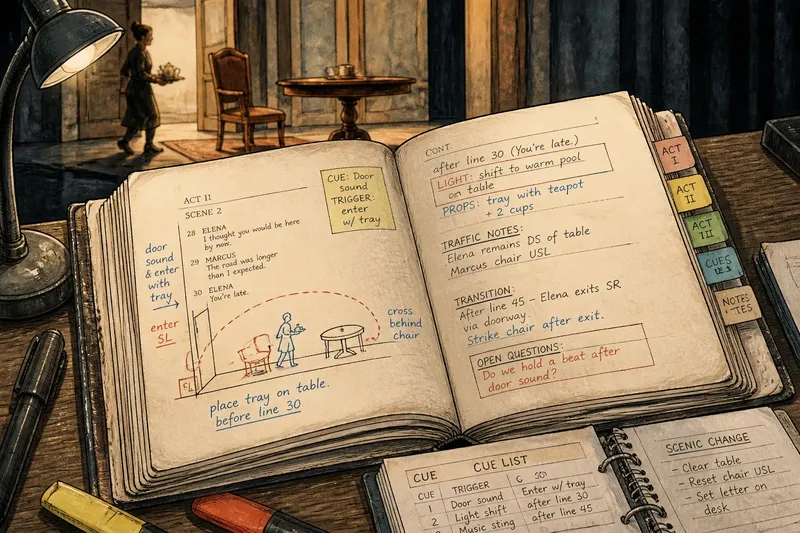
Silence is not necessarily stillness. An actor may keep looking at a partner, turn away, or try and fail to begin a sentence. A lighting shift, a door heard offstage, or the steady presence of another performer can give the interval a clear shape. Conversely, a motionless stage can feel active if the characters are waiting on a decision that matters.
Three approaches give silence different jobs
A pause can let a thought arrive
In a reflective pause, the character seems to take in what has just happened before choosing a response. The audience watches a thought form, or sees that the character cannot yet make one coherent. This kind of silence often sits between a stimulus and an answer: news is delivered, a question is asked, or an old assumption is unsettled.
The actor’s attention is the main clue. If the character appears to be listening inwardly, the pause may ask the audience to stay with that private processing. This approach suits scenes where the words that follow should feel considered, resisted, or newly understood. If the actor’s focus has no apparent destination, however, the interval can read as a break in the scene rather than a thought taking shape.
A pause can make an audience wait for something
In a suspenseful pause, attention points forward. A reply is due; someone is about to open a letter; a character might cross the room or refuse to. The audience senses a possible next event and waits to learn which one will occur. The silence creates pressure through that unfinished expectation, not merely through its length.
This approach suits scenes in which timing affects what the audience fears or hopes will happen. A pause before a confession can make the confession seem costly; a pause after a question can turn a missing answer into a choice. The tension needs an object, even if that object is only the audience’s uncertainty about what the character will do.
A pause can expose a relationship
In a relational pause, the important action may be the space between people. One character waits for acknowledgment while the other avoids looking up. A person reaches toward someone, then lets the hand fall. The interval makes a response—or its absence—legible.
This approach suits scenes built on intimacy, conflict, or unequal power. It can reveal who is allowed to take time, who is expected to answer, and whose silence others try to fill. An actor’s choice to sustain eye contact, withdraw it, or keep attending to a task can give the pause a social direction without explaining the relationship aloud.
Use a simple listening method to read the gap
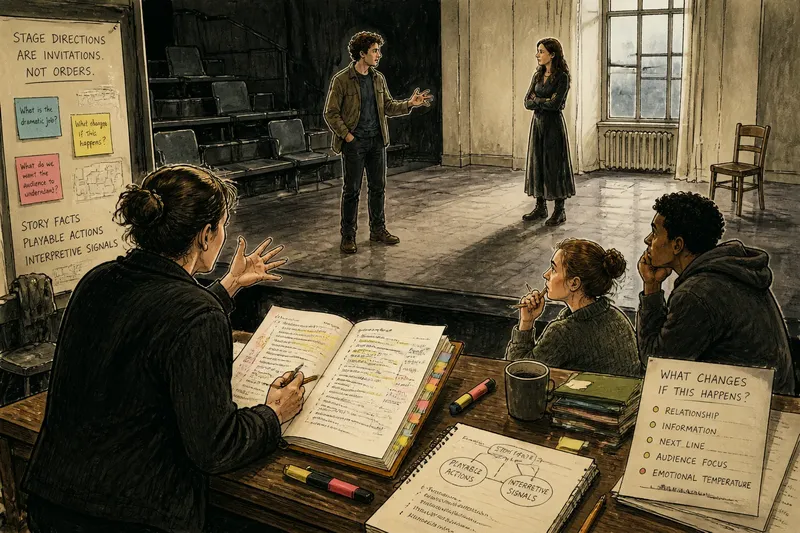
To distinguish purposeful silence from a simple gap, track three things: what has just happened, what attention does during the silence, and what changes when speech resumes. This is a way to describe the experience, not a rule that every pause must satisfy. Some scenes deliberately leave the audience uncertain about what a character is thinking.
- Mark the trigger. Notice the line, sound, movement, or revelation immediately before the pause. A silence after a direct question may carry a different expectation from one after a character finishes a long account.
- Follow attention. Ask where your focus goes once the words stop. Does it settle on a listener, a prop, a doorway, or the stillness between performers? The shift can show what the pause makes newly visible.
- Notice the pressure. Ask whether you expect an answer, action, or emotional release. If you do, identify what the scene has left unresolved; if you do not, notice whether the quiet feels reflective, exposed, or simply open.
- Watch the return. Compare the first words or movement after the silence with what came before. A changed tone, a delayed reply, or a sudden action may reveal that the interval altered the moment.
- Keep uncertainty in view. If no clear change emerges, describe the pause as unclear or slack for you rather than assuming the performers made an error. The scene may offer too little evidence, or its ambiguity may be part of the effect.
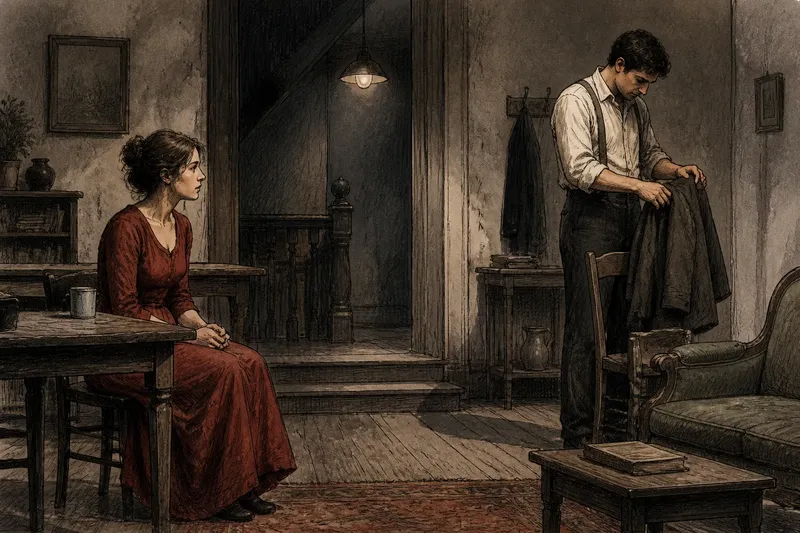
Say you are watching a scene in which one character asks, “Are you staying?” The other keeps folding a coat instead of answering. You expect a reply, but your attention moves to the careful folding and the questioner’s waiting face; when the answer finally comes, it sounds less like a simple decision than a response to the pressure of being watched. That reading is an interpretation, not proof of a hidden intention, but it names the observable change the silence made.
How can you tell what a pause is doing?
Does a longer pause always create more tension?
No. A pause gains tension when the scene gives the audience something to anticipate or risk losing. Without that pressure, extra duration can feel unshaped rather than suspenseful.
Can a pause be active if nobody moves?
Yes. A fixed gaze, a withheld answer, or the audience’s expectation of a response can keep the moment in motion. Stillness describes visible movement; it does not settle whether attention is changing.
What if different audience members read the same silence differently?
That is ordinary in live performance: spectators bring different expectations to a gesture or a withheld reply. You can ground your interpretation in what the staging makes observable, while leaving room for another audience member to notice a different cue.
When does a pause feel like a gap rather than a choice?
It may feel like a gap when attention has nowhere to go, no expectation develops, and the return to speech leaves the moment unchanged. That response does not prove the silence was accidental; it tells you that its function was difficult to perceive from your seat.
Choose the right interpretation for the scene
Of the three approaches, the thought-arrival pause is the best fit when the scene turns on processing or hesitation. The suspense pause fits when an audience is waiting for a consequential next event. The relational pause fits when the exchange is really about attention, permission, or distance between people. A single silence can carry more than one of these jobs, but naming its strongest effect keeps your reading specific.
To choose, start with the trigger and the return. If the pause follows a revelation and the next line sounds newly considered, read it as thought arriving. If you find yourself bracing for an action or answer, expectation is doing the work. If the most vivid change lies in how two characters attend—or refuse to attend—to each other, the relationship is at the center.
Then compare that interpretation with the staging. A glance toward the door may point to an expected arrival; a hand left hovering near another person may make the interval intimate or uneasy. Such details support a reading, but they do not force one. A pause in a play can remain open even when its craft is clear.
When writing about the moment, describe the cue before judging the effect: “The answer waits while the speaker keeps folding the coat” is more useful than “The pause is awkward.” Then say what the waiting did to your attention. That small distinction lets you explain how silence shaped the scene without pretending to know more than the performance showed.